Bianca Franke · 27 September 2026
Encryption Layer Configurations and Their Role in Protecting Shared Note Archives During Platform Transitions
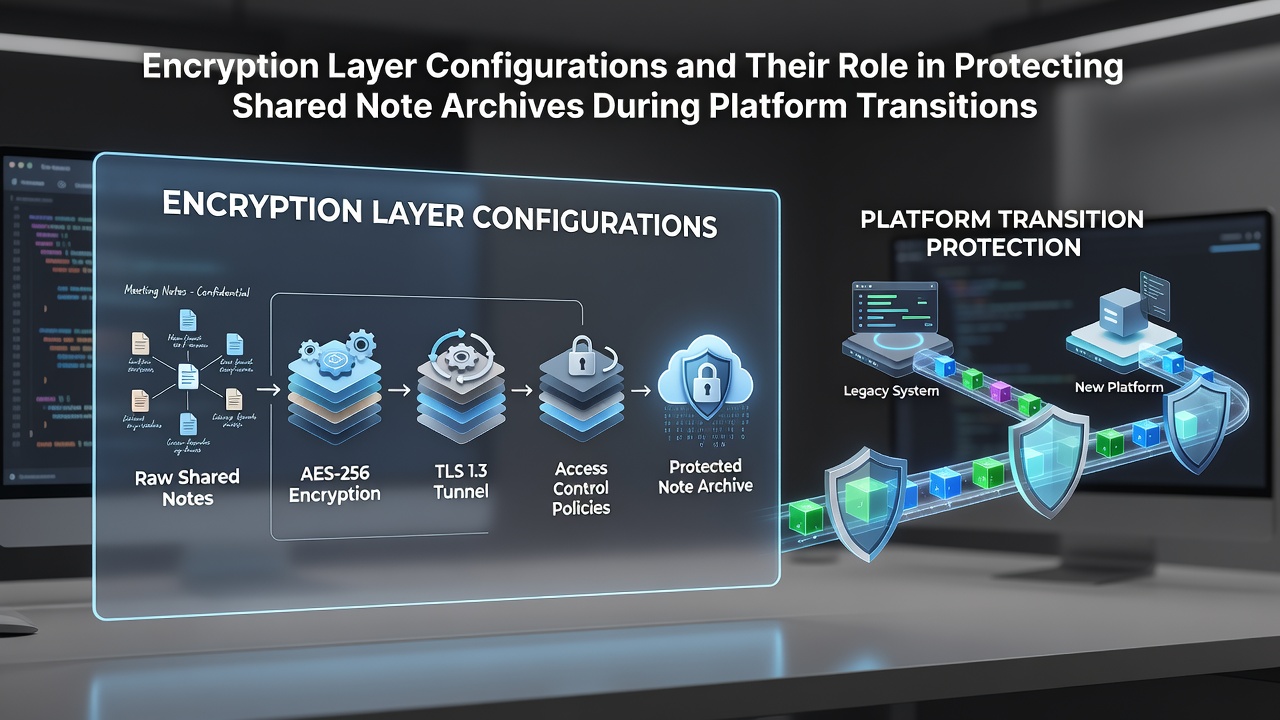
Encryption layer configurations establish multiple tiers of cryptographic protection around shared note archives, and these setups become essential when organizations shift data between platforms because they maintain confidentiality even as access controls and storage systems change hands. Researchers at institutions focused on information security have documented how layered approaches combine symmetric encryption for bulk data with asymmetric methods for key exchange, which creates barriers against unauthorized access during the transfer windows that often span days or weeks.
Core Components of Layered Encryption Setups
Organizations configure encryption layers using standards such as AES-256 for content encryption paired with RSA or ECC for key wrapping, while additional layers incorporate integrity checks through HMAC or authenticated encryption modes like GCM. Data shows that these combinations allow archives to remain protected at rest and in transit, and experts note that proper key rotation schedules prevent long-term exposure if one layer becomes compromised during a platform handoff. Those who've studied migration events observe that configurations often include client-side encryption before upload, followed by server-side re-encryption at the destination, which ensures the original platform never holds unencrypted copies after initial transfer begins.
Platform transitions introduce specific risks around key management because legacy systems may use outdated algorithms that new environments no longer support, yet careful mapping of encryption parameters across both ends reduces the chance of data exposure. According to guidelines from the National Institute of Standards and Technology, organizations must verify algorithm compatibility and implement forward secrecy where possible so that session keys do not persist beyond the migration period.
Application During Infrastructure Changes
When note archives move from one service to another, encryption configurations must account for temporary storage buffers and intermediate processing stages that could otherwise become weak points. Studies indicate that end-to-end encryption maintained throughout the process keeps the service provider from accessing plaintext, and this holds even when automated tools handle bulk exports and imports. Observers note that configurations sometimes embed metadata encryption separately from note content, which protects user identifiers and sharing permissions while the actual text travels through conversion pipelines.
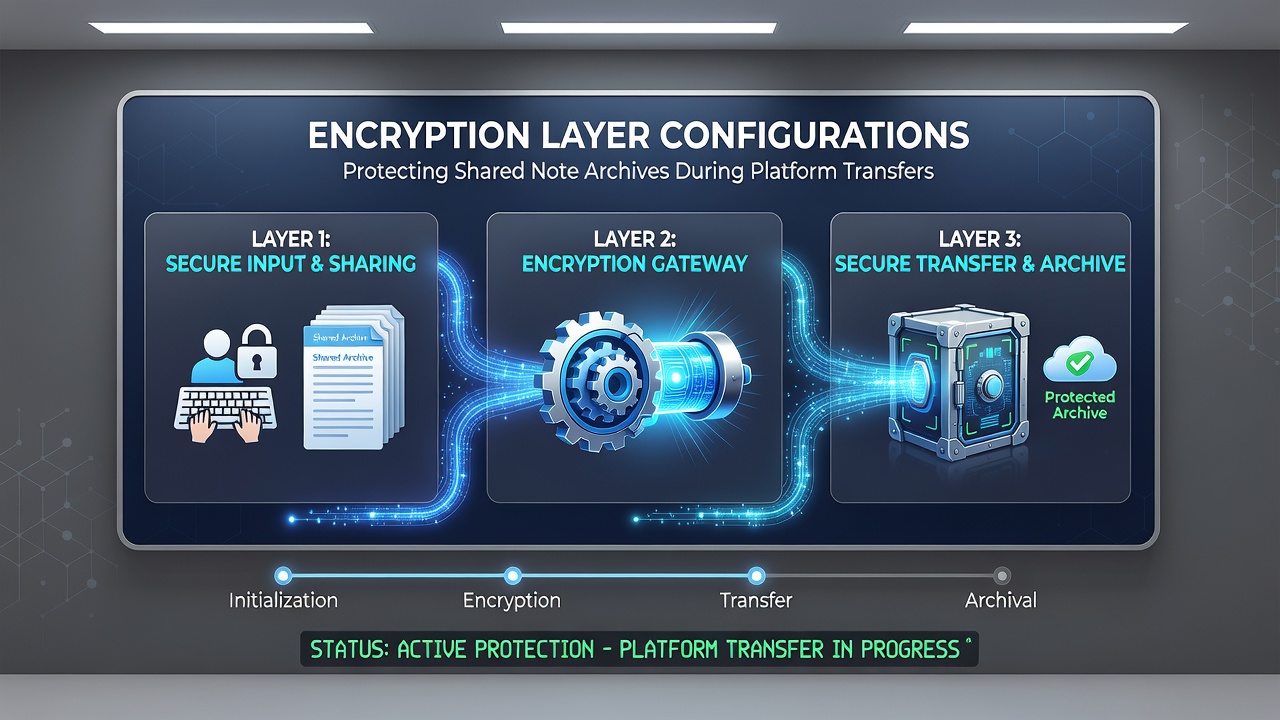
In September 2026 several note management platforms plan coordinated infrastructure upgrades that will require archive transfers, and preparatory work on encryption layers has already begun at multiple organizations to align with updated compliance requirements. European Union Agency for Cybersecurity reports emphasize the need for consistent encryption policies across borders during such moves, since data residency rules may force re-encryption under new regional keys once archives reach their destination systems.
Key Management and Audit Practices
Effective configurations rely on hardware security modules or cloud-based key management services that log every access and rotation event, which gives administrators visibility into potential anomalies during teh transition window. Research from academic groups in Canada has examined how split-knowledge key schemes distribute control among multiple parties, reducing single-point failures when teams coordinate across old and new platforms. Those implementing these methods report that audit trails generated by the encryption layers help verify that no unauthorized decryption occurred at any checkpoint.
Additional safeguards include versioned encryption policies that allow rollback if incompatibilities surface mid-migration, and these policies often tie into broader access control lists that limit who can initiate decryption operations on the receiving end. Figures from industry analyses reveal that organizations using multi-layer setups experience fewer incidents of data leakage compared with single-encryption approaches when platform changes involve third-party migration tools.
Conclusion
Encryption layer configurations continue to serve as a foundational element for protecting shared note archives whenever platform transitions occur, and the combination of established cryptographic standards with rigorous key handling practices maintains data security across changing environments. As infrastructure updates approach in 2026 and beyond, documented methods from regulatory and research sources provide clear frameworks that organizations apply to keep archives confidential throughout the process.