Ben Patterson · 11 October 2026
Navigating Version History Conflicts in Multi-User Note Repositories During Peak Usage Periods
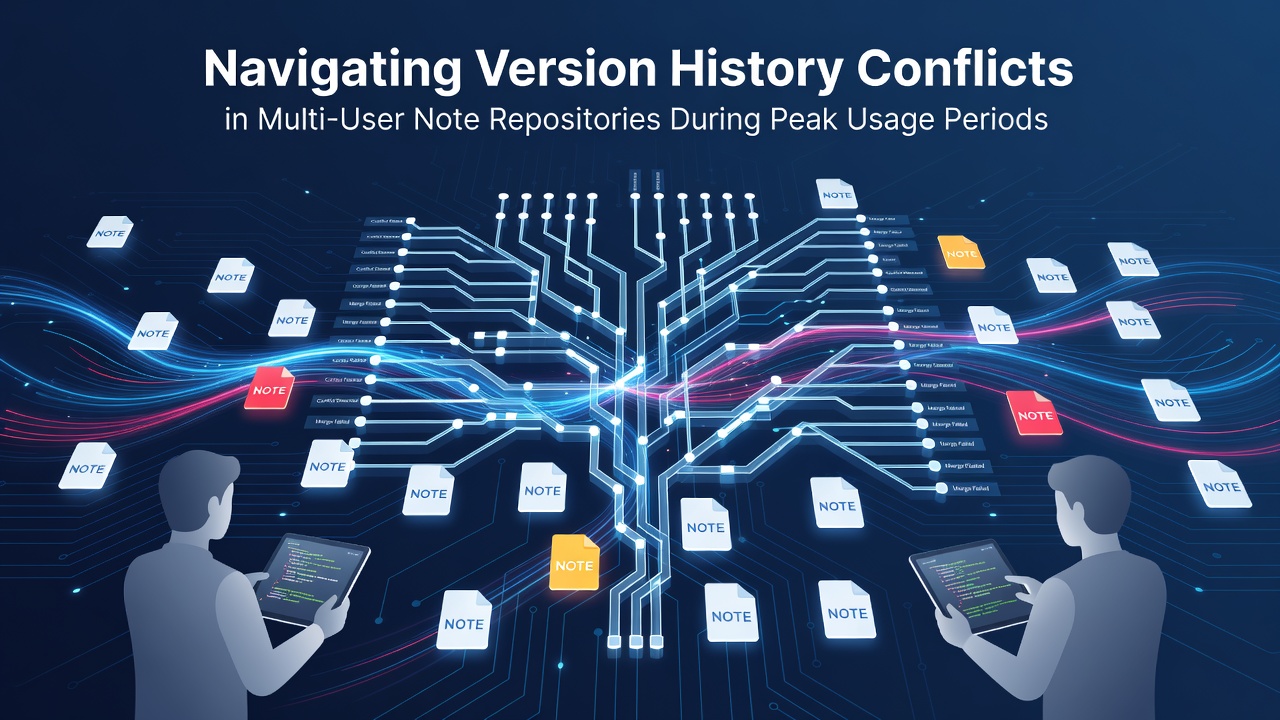
Multi-user note repositories face version history conflicts when several contributors edit the same entry at once, and these issues intensify during peak usage windows when concurrent access spikes. Systems track changes through sequential logs yet simultaneous modifications create overlapping revisions that require manual or automated reconciliation. Data from collaborative platform monitoring shows that conflict rates can rise by up to 40 percent when user numbers double within short timeframes.
Core Mechanisms Behind Conflicts
Version control in shared repositories relies on timestamped snapshots and merge algorithms that compare incoming edits against existing branches. Conflicts emerge when two or more users alter the same paragraph, list item, or metadata field without an intervening sync event. Researchers at academic institutions have documented that simple text insertions rarely trigger problems, whereas structural changes such as reordering sections or updating embedded links frequently produce irreconcilable deltas. Observers note that peak periods compound the problem because network latency delays the propagation of updates, leaving local copies out of alignment longer than during off-peak hours.
Patterns Observed in High-Traffic Windows
Usage analytics from large-scale note services reveal consistent spikes between 9 a.m. and 11 a.m. local time across multiple time zones, with secondary peaks occurring in the early evening. In October 2026, infrastructure reports indicated that educational and corporate users converged on shared repositories during mid-term project deadlines and quarterly reporting cycles, pushing simultaneous session counts beyond normal baselines. These surges expose bottlenecks in conflict detection routines that scan entire revision trees rather than isolating changed blocks. Teams that schedule bulk imports or automated backups during these windows report elevated merge failures that interrupt workflow until administrators intervene.
Detection and Early Warning Systems
Modern repositories embed real-time diff engines that flag potential overlaps before a user saves an edit. When the system detects concurrent modifications to the same content block, it surfaces a notification alongside the conflicting lines. Studies conducted by European research consortia demonstrate that proactive alerts reduce final conflict volume by roughly one-third compared with post-save resolution alone. Some platforms integrate operational transformation techniques originally developed for real-time editors, allowing partial merges to proceed while preserving user intent. Data indicates that repositories employing these methods maintain lower rollback rates even when daily active users exceed several thousand.
Resolution Strategies Employed by Administrators
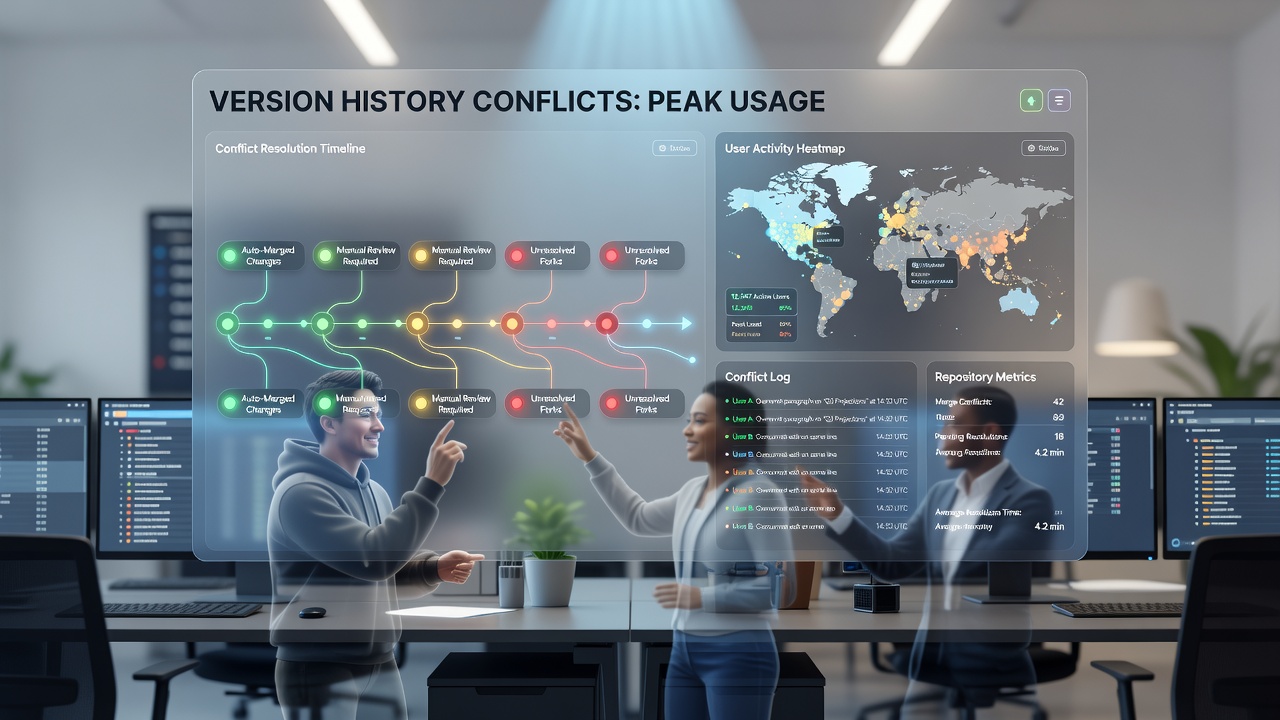
Manual resolution remains the fallback when automated tools cannot determine the authoritative version. Administrators compare parallel branches side by side and select or combine elements from each. Organizations that maintain detailed edit provenance logs find that contextual metadata such as author identity and edit duration helps prioritize which changes to retain. Automated scripts sometimes apply last-writer-wins rules during extreme load, yet this approach risks discarding valid contributions. Industry analyses from North American research centers emphasize the value of staging environments that replay peak-traffic scenarios in advance, allowing teams to test merge policies without affecting production data.
Preventive Measures and Configuration Adjustments
Repository administrators reduce conflict incidence through granular permission models that limit simultaneous write access to sensitive sections. Scheduled sync intervals can be shortened during anticipated high-load periods, while read-only mirrors absorb query traffic and ease pressure on the primary store. Training programs that instruct contributors on atomic commit practices further decrease overlapping edits. Figures released by Australian digital infrastructure agencies show that teams adopting these layered controls experience measurable declines in support tickets related to version divergence.
External references provide additional context on scalable collaboration frameworks. A report from Canadian innovation authorities outlines best practices for distributed document systems, and a separate analysis from the Association for Computing Machinery examines algorithmic approaches to conflict-free data types.
Conclusion
Version history conflicts in multi-user note repositories represent a predictable consequence of concurrent editing under load. Effective navigation depends on layered detection, timely resolution protocols, and proactive configuration tuning calibrated to usage patterns. Continued monitoring of traffic trends, including those documented in October 2026, enables administrators to refine policies before conflicts escalate. Organizations that integrate these practices sustain collaborative integrity across expanding user bases.