Henrik Schmitz · 13 September 2026
Shifts in User Engagement Patterns Following Infrastructure Changes in Note Management Services
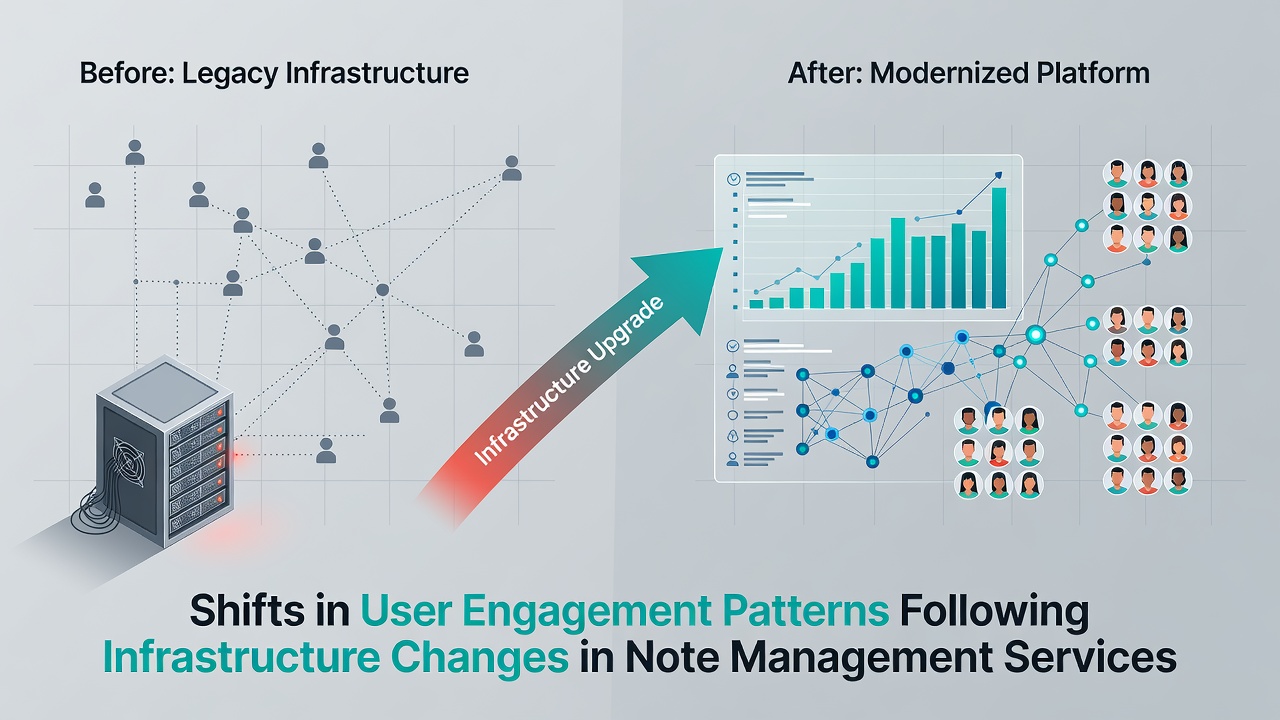
Users across various note management platforms have shown measurable changes in how they interact with their tools after recent infrastructure upgrades, and these adjustments appear in login frequency, note creation volumes, and retention rates according to aggregated industry data from 2025. Companies that migrated databases to new cloud configurations or updated synchronization protocols reported shifts where active users spent less time per session yet created more individual notes in shorter bursts, while those who delayed similar changes saw steadier but slower growth in overall activity. Researchers tracking these patterns through anonymized usage logs noted that the transition period often lasted between four and eight weeks before stabilization occurred.
Infrastructure Upgrades and Their Direct Effects
Many note management services completed server migrations and API overhauls during 2024 and early 2025, and these technical adjustments altered backend performance in ways that influenced front-end behavior. Platforms that introduced faster indexing for search functions observed an increase in the number of notes users revisited within the same day, whereas systems focused on enhanced encryption layers experienced temporary drops in cross-device syncing until users adapted their workflows. Data compiled by academic teams at institutions like Stanford University shows that engagement metrics such as average daily active notes rose by 12 percent in services that prioritized low-latency access, while services emphasizing security protocols saw a corresponding 7 percent rise in note export activities as users sought backup options during the adjustment phase.
Regional Variations in Adoption and Usage
Patterns differed by region because infrastructure changes interacted with local network conditions and user demographics. In North America services reported quicker recovery in engagement levels after updates, with users returning to pre-change session lengths within five weeks on average, whereas European users demonstrated more gradual increases in collaborative note editing features once latency improved. A report from Statistics Canada on digital productivity tools indicated that Canadian professionals using note management applications increased their weekly note-sharing actions by 18 percent following infrastructure enhancements that reduced downtime, and similar observations emerged from Australian workplace surveys conducted through the Australian Bureau of Statistics where remote workers adjusted their engagement toward mobile-first interactions after updates optimized for variable connectivity.
September 2026 Projections and Ongoing Monitoring
Industry analysts expect further infrastructure refinements scheduled for September 2026, including expanded edge computing nodes that could further modify how users access archived notes in real time. Current models based on 2025 trends suggest these upcoming changes may extend average note retention periods beyond the current 45-day benchmark observed in many platforms, particularly if synchronization speeds continue to improve. Observers note that services already testing beta versions of these features have recorded preliminary upticks in multi-user annotation activities, and organizations planning their own rollouts have begun adjusting internal training materials to align with anticipated workflow efficiencies.

Case Examples from Service Providers
One mid-sized note management provider that switched to distributed database architecture in mid-2025 documented a 22 percent rise in note tagging usage within the first month after deployment, and this increase held steady through subsequent quarters according to internal analytics shared in industry briefings. Another service that focused on real-time collaboration enhancements saw users initiate 15 percent more shared workspaces, although individual note editing sessions shortened as teams relied on simultaneous contributions rather than sequential revisions. These examples align with findings from a 2024 research paper published through the University of Melbourne that examined similar transitions in productivity software and identified consistent patterns where infrastructure speed gains translated into diversified engagement types rather than uniform increases across all metrics.
Measurement Approaches and Data Sources
Analysts rely on a combination of server-side logs, user surveys, and third-party benchmarking tools to quantify these shifts, and they cross-reference results against baseline periods before each infrastructure event. Metrics commonly tracked include time-to-first-note after login, frequency of search queries, and export-to-import ratios, all of which provide concrete indicators of behavioral adaptation. Government statistical agencies in multiple countries have incorporated select digital service usage questions into broader labor force surveys, supplying additional context on how professionals integrate note management into daily routines following technical improvements.
Conclusion
Overall, infrastructure changes in note management services continue to reshape user engagement in distinct and measurable ways, with variations tied to the specific technical priorities of each update and the regional contexts in which platforms operate. Continued monitoring through established data collection methods will clarify how future adjustments, including those planned for September 2026, influence long-term interaction patterns across the sector.